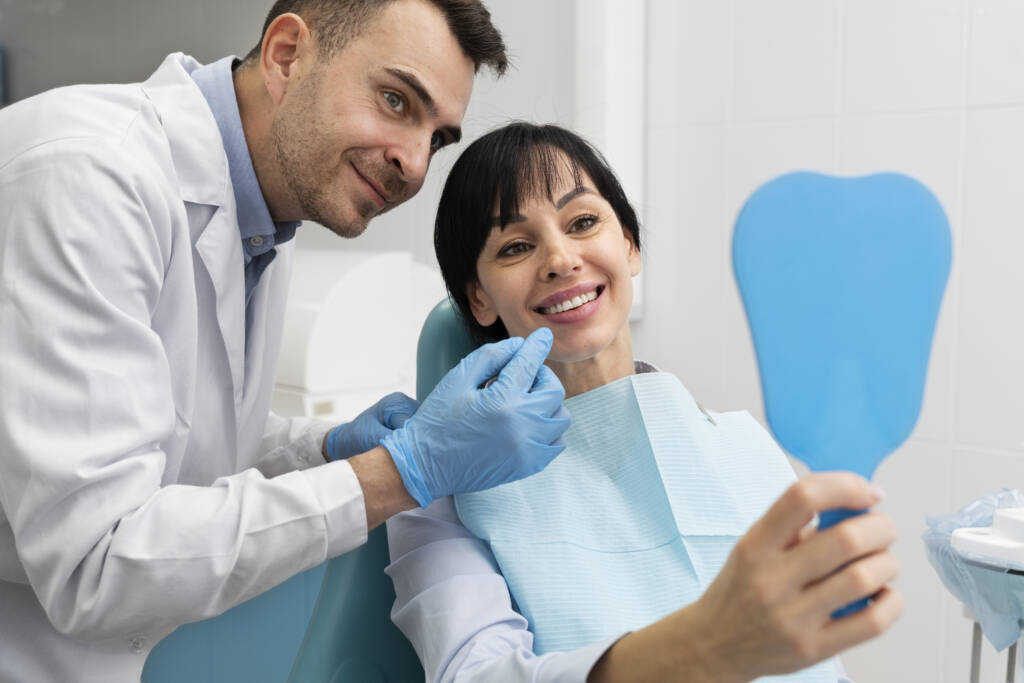
A beautiful, even smile doesn’t just boost your confidence — it also supports better oral health. Uneven or misaligned teeth can affect your bite, make cleaning difficult, and even lead to jaw pain or premature tooth wear. Thankfully, modern dentistry offers several safe and effective options to correct uneven teeth and give you the smile you’ve always wanted.
1. Braces
Traditional metal braces remain one of the most effective methods to correct crooked, crowded, or gapped teeth.
How they work: Brackets are attached to your teeth and connected with wires that gradually shift them into the correct position.
Best for: Complex misalignments, severe crowding, and bite correction.
Pros: Precise, predictable results.
Cons: Visible brackets and wires.
2. Clear Aligners (Invisalign and Similar Systems)
Clear aligners are a popular modern alternative to braces.
How they work: Custom-made transparent trays gently move your teeth into place over time.
Best for: Mild to moderate misalignment or spacing issues.
Pros: Nearly invisible, removable, comfortable.
Cons: Require consistent wear (20–22 hours a day) for best results.
3. Dental Veneers
Veneers offer an instant cosmetic fix for slightly uneven or chipped teeth.
How they work: Thin porcelain or composite shells are bonded to the front surface of the teeth.
Best for: Minor gaps, uneven size or shape, discoloration.
Pros: Immediate aesthetic improvement.
Cons: Cosmetic only – does not correct bite alignment.
4. Dental Bonding
Bonding is a quick, affordable way to reshape uneven teeth.
How it works: Tooth-colored resin is applied and sculpted to create an even appearance.
Best for: Slight irregularities, chipped edges, or small gaps.
Pros: Fast, painless, and cost-effective.
Cons: Less durable than veneers or crowns.
5. Dental Contouring or Enamel Shaping
For minor unevenness, enamel reshaping can smooth edges and improve balance.
How it works: Small amounts of enamel are gently polished away to align the tooth shape.
Best for: Mild crowding, sharp edges, or uneven lengths.
Pros: Instant results.
Cons: Only suitable for small adjustments.
6. Orthodontic Surgery (for Severe Cases)
In complex cases involving jaw misalignment, corrective jaw surgery (orthognathic surgery) may be combined with orthodontics.
Best for: Severe bite or skeletal discrepancies.
Pros: Permanent correction of function and appearance.
Cons: Invasive and requires recovery time.
Choosing the Right Option
The best treatment depends on the degree of unevenness, your oral health, and your cosmetic goals. A dental consultation, X-rays, and digital smile analysis can help determine which option suits you best.
Conclusion