Keeping your teeth healthy starts with the right brushing habits. Many people brush daily but still develop cavities and gum problems because they use the wrong technique or keep using an old toothbrush for too long.
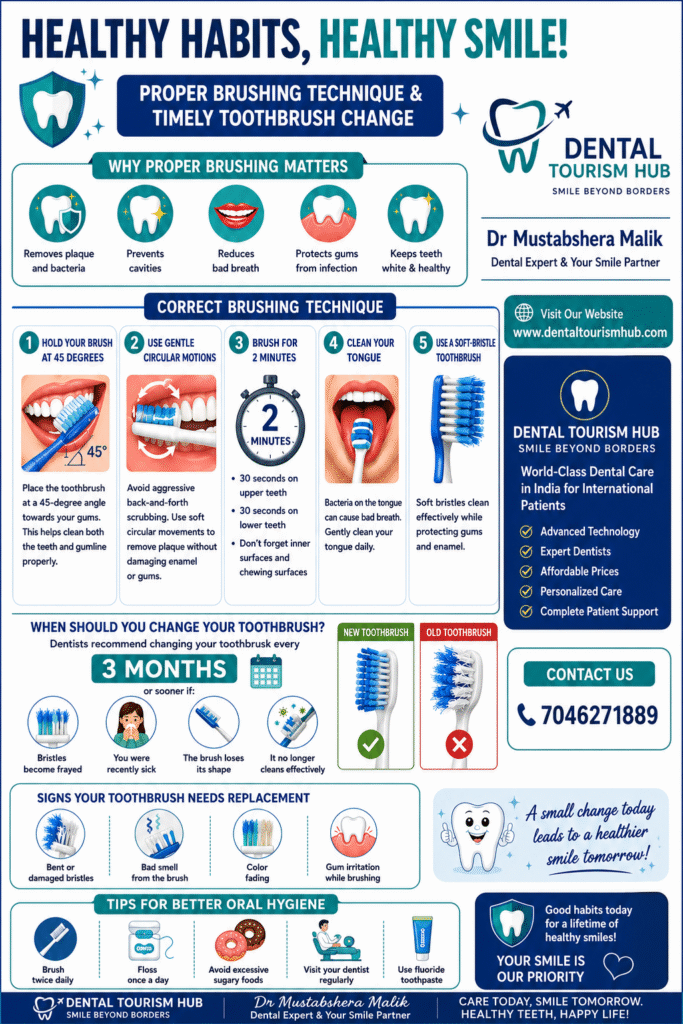
Why Proper Brushing Matters
Correct brushing helps:
- Remove plaque and bacteria
- Prevent cavities
- Reduce bad breath
- Protect gums from infection
- Keep teeth naturally white and healthy
- Prevent cavities
Correct Brushing Technique
Step 1: Hold Your Brush at 45 Degrees
Place the toothbrush at a 45-degree angle towards your gums. This helps clean both the teeth and gumline properly.
Step 2: Use Gentle Circular Motions
Avoid aggressive back-and-forth scrubbing. Use soft circular movements to remove plaque without damaging enamel or gums.
Step 3: Brush for 2 Minutes
Spend at least:
30 seconds on upper teeth
30 seconds on lower teeth
Don’t forget inner surfaces and chewing surfaces
Step 4: Clean Your Tongue
Bacteria on the tongue can cause bad breath. Gently clean your tongue daily.
Step 5: Use a Soft-Bristle Toothbrush
Soft bristles clean effectively while protecting gums and enamel.
When Should You Change Your Toothbrush?
Dentists recommend changing your toothbrush every 3 months or sooner if:
Bristles become frayed
You were recently sick
The brush loses its shape
It no longer cleans effectively
Old toothbrushes cannot clean properly and may collect harmful bacteria.
Signs Your Toothbrush Needs Replacement

Brush twice daily
Floss once a day
Avoid excessive sugary foods
Visit your dentist regularly
Use fluoride toothpaste
Healthy brushing habits today can prevent expensive dental treatments in the future.
Conclusion
A proper brushing technique combined with timely toothbrush replacement is the foundation of excellent oral health. Small daily habits can protect your smile for years to come.